The CUBAN MISSILE CRISIS
THE POWER OF DIPLOMACY RESOLVING TENSIONS BETWEEN THE US AND THE USSR IN THE EARLY 1960s
BY GABRIEL KANTOR
THESIS
Although war is a powerful tool, the Cuban Missile Crisis has shown us that diplomacy can hold even more power, saving lives in the process, no matter the situation. We can see the full extent of diplomacy from the United States and the Soviet Union managing to avoid intercontinental nuclear war with a single deal.
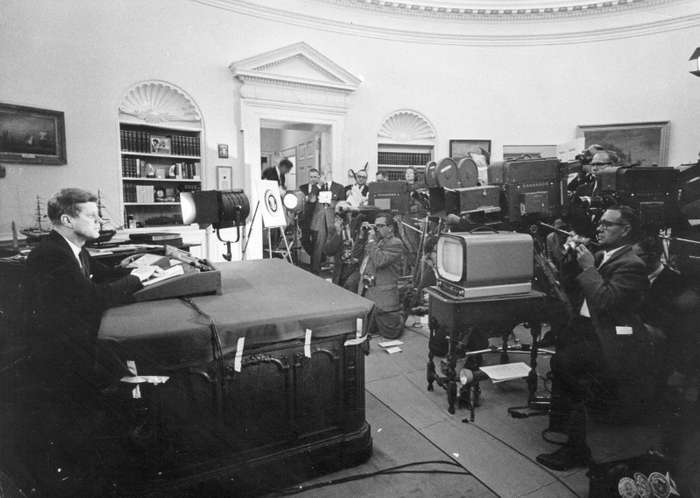
U.S. Pres. John F. Kennedy announcing the U.S. naval blockade of Cuba, October 22, 1962.
Credit: Encyclopaedia Britannica
intro to the crisis
In the early 1960s, the tension between the United States and the Soviet Union was higher than it had ever been. They were both global superpowers, but the United States was capitalist, and the Soviet Union was communist. The difference in economic views led to a rival status between the countries during a period we know as the Cold War. At the time, Cuba was also communist, and after the United States failed to invade them, they feared another attempt at invasion. The fear of another invasion led them to request help from the Soviet Union, who accepted the request in the form of bringing Medium Range Nuclear Missiles. The US found out, and the Crisis as we know it was launched.